


95 Acres of Butterfly Habitat Preserved

TLCNJ is pleased to announce the permanent protection of 95 acres in Hardwick Township, advancing long-term conservation goals in the Paulins Kill watershed and safeguarding sensitive limestone habitat, groundwater resources, and a large connected assemblage of preserved forestland in northwestern New Jersey.
The project challenged TLCNJ’s Land Team in many ways—including subdividing to save a farmhouse, cleaning up a tire dumping ground, and managing a heavy invasive species load—but they persisted, because of how importance this property is to the larger landscape. It's part of a significant swath of protected land called the Hardwick Limestone Greenway, sitting atop porous limestone geology that readily absorbs rainfall and recharges groundwater. This makes the area especially important for water quality protection and highly sensitive to pollution and land disturbance. The tract also lies near a headwater tributary of the Paulins Kill River within a landscape associated with rare forest communities, sinkholes, vernal pools, and high biodiversity.
“This property is vitally important due to its location in the landscape. It is central to hundreds of acres of preserved land: Hardwick Township’s Spring Valley Preserve and Slabtown Creek Park, the New Jersey Natural Land Trust’s Hardwick Meadows Preserve, Warren County’s White Lake Natural Area, and several preserved farms. It also lies in the heart of Bobcat Alley, and 100% of the property is in limestone. There is a lovely sinkhole pond out back. The property has not been well cared for in recent decades, and The Conservancy hopes to find ways to assist its recovery and funding to create some outstanding habitat in the years to come,” says Sandra Urgo, Vice President of Land Preservation and Stewardship.
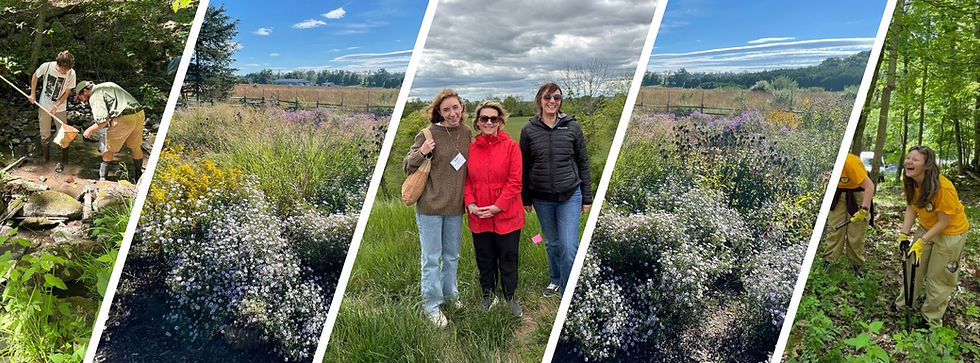
This property is set amid the rapidly growing Bobcat Alley wildlife corridor and complements other recent TLCNJ acquisitions in this area. More than 73 percent of this important conservation area is forested or wetland habitat, while the acreage in former farm fields will be reforested as part of TLCNJ’s long-term stewardship plans, if grant funding can be obtained. While the amount of stewardship effort is daunting, there are glimpses of how beautiful this land can be once it has been restored. There are amazing rare species to be found among the invasive plants, including unique plants that are required for many varieties of butterflies—including the plant that supports the Globally Rare and State Endangered northern metalmark butterfly.
The Open Space Institute (OSI) was a critical partner in this project. “The Open Space Institute congratulates TLCNJ on protecting another important forested property in the Paulins Kill River watershed,” said Bill Rawlyk, OSI’s Senior Mid-Atlantic Program Manager. “This property lies on a limestone aquifer that helps store and purify groundwater, supporting clean drinking water for nearby wells and the Paulins Kill River. With its protection, we are making meaningful progress in preserving a corridor where forests, biodiversity, groundwater resources, and public access all benefit together,” said Bill Rawlyk, OSI’s Senior Mid-Atlantic Program Manager.
The Nature Conservancy also came through with important funding for this project. Their dedication to preserving Bobcat Alley is unmatched, and we are very grateful for their funding for this important acquisition.
Keep an eye out for more news about this property as we continue to rehabilitate the ecosystem and observe new species!


Comments